August 11, 2026
Why Is My Transmission Slipping? Common Causes, Symptoms & What to Do
If you press the gas and your engine RPM goes up but your vehicle doesn’t accelerate the way it should, your transmission may be slipping. You may also notice the transmission seems to hesitate between gears, suddenly revs during a shift, or feels like it briefly loses power before catching again.
Transmission slipping is one of the most common symptoms drivers associate with transmission problems, but “slipping” describes what the vehicle is doing—not necessarily what has failed.
There are several reasons a transmission can slip, ranging from fluid or hydraulic pressure problems to valve body issues, torque converter problems, or worn internal clutch components.
Here’s what you should know if you think your transmission is slipping.
What Does a Slipping Transmission Feel Like?
A slipping transmission can feel different depending on the vehicle and the type of failure.
One of the most common signs is an unexpected increase in engine RPM without a matching increase in vehicle speed. You may be accelerating normally when the RPM suddenly jumps before the transmission catches and continues accelerating.
Other symptoms can include:
- RPM suddenly increasing during acceleration
- Engine revving without the vehicle accelerating normally
- Flare or hesitation between shifts
- Delayed engagement into Drive or Reverse
- Hard or erratic shifting
- Loss of power while accelerating
- Shuddering or vibration
- Transmission getting stuck in a gear
- Check engine or transmission warning light
- A burnt smell from the transmission fluid
Sometimes slipping only happens when the transmission is cold. Other times, the vehicle may drive normally at first and begin slipping once the transmission reaches operating temperature.
Those differences can be important when diagnosing the problem.
Why Is My Transmission Slipping?
There isn't one single cause of transmission slipping.
Automatic transmissions rely on a combination of hydraulic pressure, transmission fluid, electronic controls, solenoids, the valve body, torque converter, and internal clutch components to operate correctly.
A problem in any of these systems can potentially create a slipping sensation.
That’s why properly diagnosing a slipping transmission is important before deciding what needs to be repaired.
1. Low Transmission Fluid
Transmission fluid is responsible for much more than lubrication. An automatic transmission uses fluid to create the hydraulic pressure necessary to apply internal components.
If the fluid level becomes too low, the transmission may not be able to maintain proper pressure.
This can cause slipping, delayed engagement, erratic shifting, overheating, and eventually internal damage.
However, transmission fluid generally doesn't just disappear.
If a transmission is low on fluid, there may be a leak that needs to be located and corrected.
2. Worn Transmission Clutches
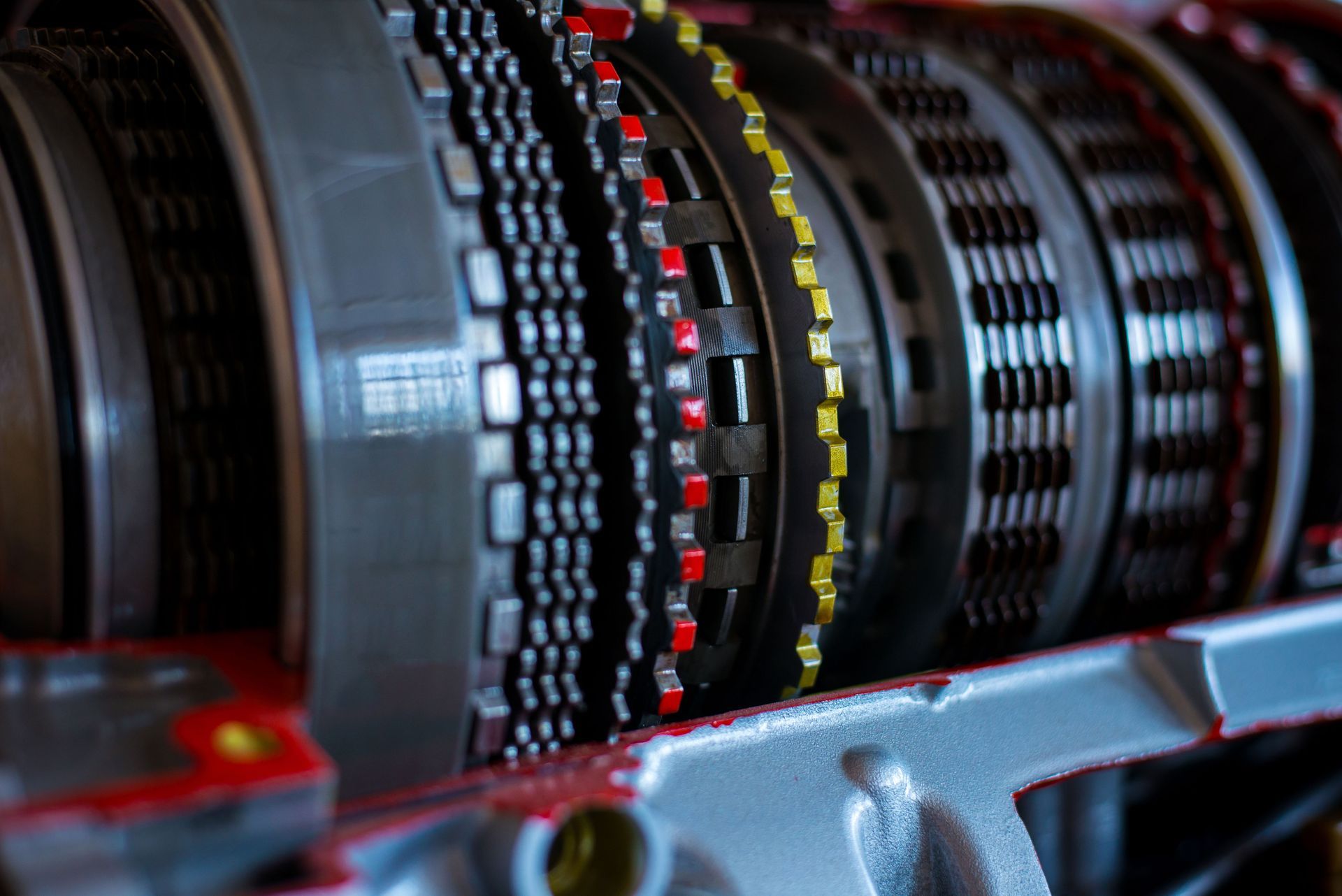
Inside an automatic transmission are multiple clutch packs that apply and release depending on which gear is needed.
Over time—or because of another transmission problem—the friction material on these clutches can wear or burn.
When a clutch can no longer hold properly, it begins to slip.
Think about trying to hold something tightly with your hand. If your grip becomes weaker, the object starts sliding through your fingers. A worn transmission clutch behaves somewhat similarly: it can no longer hold the amount of force being applied to it.
Once clutch material is significantly worn or burned, simply replacing the transmission fluid will not restore that missing friction material.
3. Valve Body Problems
The valve body acts as the hydraulic control center of an automatic transmission.
It contains valves and fluid passages that control where transmission fluid goes and how pressure is applied.
As a valve body wears, hydraulic pressure can leak internally or fail to reach the correct circuit at the right pressure.
The result may feel like slipping, delayed shifts, harsh shifts, shift flares, or inconsistent transmission operation.
Some valve body problems can be corrected without completely remanufacturing the transmission. Others may occur alongside internal transmission damage.
The only way to know is through proper diagnosis.
4. Transmission Solenoid Problems
Modern transmissions use electronically controlled solenoids to help regulate fluid flow and hydraulic pressure.
A failed, sticking, or improperly operating solenoid can affect transmission pressure or shift timing.
That may cause slipping, delayed shifts, hard shifts, incorrect gear changes, or limp mode.
However, a diagnostic trouble code mentioning a solenoid doesn't automatically mean the solenoid itself needs to be replaced.
Wiring problems, valve body wear, hydraulic problems, and internal transmission damage can sometimes cause similar codes.
5. Torque Converter Problems
The torque converter transfers power from the engine to the transmission and contains a torque converter clutch that locks under certain driving conditions.
When the torque converter or torque converter clutch begins to fail, you may experience symptoms that can easily be mistaken for transmission slipping.
These can include RPM fluctuations, shuddering, vibration, poor acceleration, overheating, or a sensation similar to driving over rumble strips.
Torque converter problems can also generate trouble codes such as P0741, depending on the vehicle and failure.
6. Hydraulic Pressure Problems
Automatic transmissions depend heavily on hydraulic pressure.
A worn pump, internal leak, worn valve body, damaged seals, pressure-control problem, or other hydraulic issue can prevent a clutch from receiving enough pressure to apply correctly.
If the clutch doesn't apply firmly enough, it can slip.
This is also why finding the cause of a transmission failure matters. Replacing one damaged component without correcting the condition that caused it can lead to another failure.
7. Internal Transmission Damage
Sometimes slipping is a symptom of more extensive internal wear.
Burned clutches, damaged drums, worn bushings, failed seals, damaged hard parts, or excessive debris circulating through the transmission can all contribute to slipping and other shifting problems.
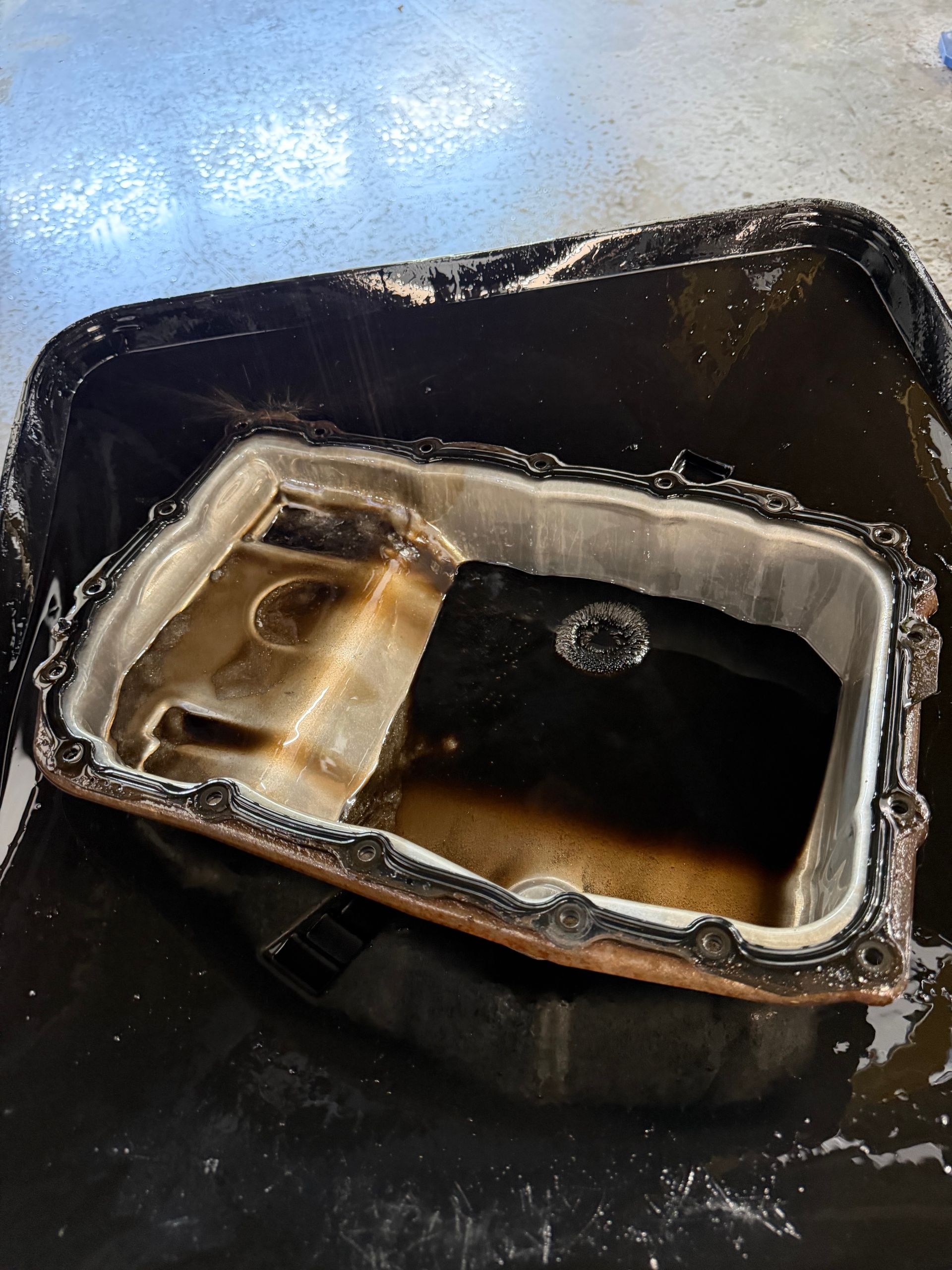
This is where inspecting the condition of the transmission fluid and, when appropriate, removing the transmission pan can provide valuable information.
The material inside the pan can tell an experienced transmission technician a lot about what's happening inside the unit.
Will Changing the Transmission Fluid Fix Slipping?
This is one of the most common questions we hear.
It depends on why the transmission is slipping.
If the problem is related to fluid level or fluid condition and there has not been significant internal damage, correcting the fluid issue may help.
But if the transmission is slipping because the internal clutch material is already worn or burned, changing the fluid cannot replace that missing material.
This is why we recommend diagnosing the problem before assuming a transmission service will fix it.
Does a Slipping Transmission Mean I Need a New Transmission?
No.
A slipping transmission does not automatically mean you need a new transmission.
Depending on the cause, the problem could involve fluid level, an electrical issue, a solenoid, valve body, torque converter, or another repairable component.
On the other hand, if the transmission has significant internal clutch or hard-part damage, more extensive repair or remanufacturing may be necessary.
The important thing is determining what's actually happening before replacing parts or condemning the entire transmission.
How Do We Diagnose a Slipping Transmission?
At Superior Transmissions & Auto, we don't diagnose a transmission based on one symptom or trouble code.
When possible, the vehicle is test driven so we can experience the problem firsthand. We scan the vehicle for diagnostic trouble codes and review transmission data to see what the computer is commanding and what the transmission is actually doing.
Depending on the vehicle and symptoms, we may also inspect the transmission fluid, put the vehicle on a lift, check for leaks, perform additional testing, and, when appropriate, remove the transmission pan to inspect the fluid and look for signs of internal wear.
All of those pieces help us determine whether the problem is electronic, hydraulic, mechanical, or a combination of issues.
Can I Keep Driving With a Slipping Transmission?
We don't recommend ignoring a transmission that is actively slipping.
When a clutch slips, it creates heat and friction. That can damage the clutch material further and contaminate the transmission fluid with debris.
A problem that may initially be limited to one area can potentially cause additional damage if the vehicle continues to be driven.
If your vehicle suddenly begins slipping badly, loses gears, struggles to move, overheats, or develops severe shifting problems, continuing to drive it may cause further damage.
Transmission Slipping in Montgomery or Orange County, NY?
If you're searching “Why is my transmission slipping?” because your vehicle has started acting differently, the next step shouldn't be guessing which part to replace.
It should be finding out why it's slipping.
Superior Transmissions & Auto specializes in transmission diagnostics and in-house transmission remanufacturing in Montgomery, NY. We work with customers throughout Orange County and the Hudson Valley and diagnose transmission problems ranging from valve body and solenoid issues to torque converter failures and internal transmission damage.
Whether your vehicle is slipping, shifting hard, hesitating, shuddering, or simply doesn't feel right, we'll work to determine the cause before recommending the appropriate repair.
Superior Transmissions & Auto
663 State Route 17K
Montgomery, NY 12549
(845) 522-8104
When Bad Shifts Happen, We Fix It!