August 11, 2026
Will a Transmission Fluid Change or Flush Fix Transmission Problems?
Transmission fluid is extremely important to the operation and life of an automatic transmission. It lubricates moving components, helps control heat, and provides the hydraulic pressure the transmission needs to apply clutches and operate correctly.
Because transmission fluid is so important, it's understandable that when a vehicle starts slipping, shifting hard, hesitating, or acting differently, one of the first questions people ask is:
“Will changing or flushing the transmission fluid fix it?”
In most cases, if a transmission already has a mechanical, hydraulic, or internal failure, the answer is no.
Transmission fluid services are primarily maintenance. They are intended to help maintain a properly operating transmission—not repair worn, broken, or damaged components inside one.
Here's the difference and why diagnosing a transmission problem before performing a fluid service matters.
What Does Transmission Fluid Actually Do?
Automatic transmission fluid has several important jobs.
It lubricates bearings, bushings, gears, and other moving components. It helps remove heat. Most importantly, an automatic transmission uses fluid hydraulically to operate its internal clutches and controls.
Modern transmissions rely on very specific fluid types and carefully controlled hydraulic pressure.
When the fluid becomes contaminated, overheated, or too low, transmission operation can be affected.
That's why maintaining the correct transmission fluid and servicing it at the appropriate intervals is important.
But transmission fluid can only do its job if the components inside the transmission are still capable of doing theirs.
A Transmission Fluid Service Is Maintenance, Not a Repair
This is the biggest misconception we want vehicle owners to understand.
A transmission fluid change, transmission service, or transmission flush is maintenance.
It's similar to changing your engine oil.
Changing engine oil is extremely important for maintaining an engine, but an oil change won't repair a worn bearing, broken timing chain, or damaged piston.
Transmission fluid works the same way.
Fresh transmission fluid cannot repair:
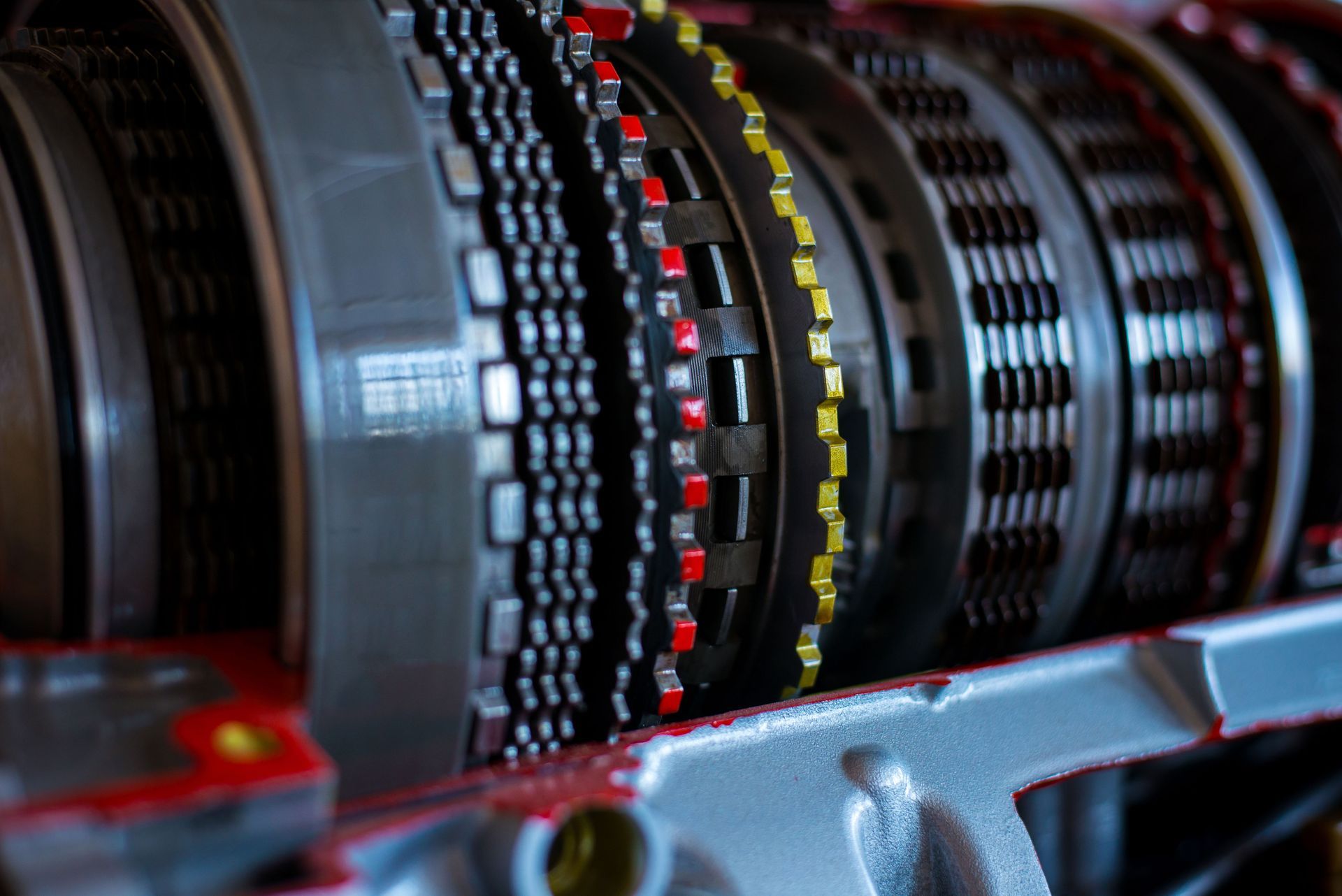
- Burned or worn clutch packs
- A damaged torque converter
- Worn valve body components
- Broken internal hard parts
- Failed bearings or bushings
- Damaged drums or shafts
- Worn internal seals
- Mechanical transmission damage
If a component has physically worn out or failed, replacing the fluid cannot restore that component.
Will a Transmission Flush Fix Slipping?
If your transmission is already slipping, we don't recommend assuming a flush will fix it.
Transmission slipping can be caused by low fluid, hydraulic pressure problems, worn clutch packs, valve body problems, solenoid issues, torque converter problems, or other internal failures.
If worn clutch material is causing the transmission to slip, fresh fluid cannot replace that missing material.
Think of a worn tire. Putting air in the tire is necessary for it to operate properly, but adding air can't restore tread that has already worn away.
Transmission fluid is similar.
If the transmission has an internal failure, changing the fluid does not reverse the damage.
Will New Transmission Fluid Fix Hard Shifting?
Not necessarily.
Hard shifting can have many causes, including valve body wear, solenoid problems, incorrect hydraulic pressure, electronic control issues, internal transmission wear, or problems outside the transmission.
A fluid service may be appropriate as scheduled maintenance on a properly functioning transmission, but hard shifting should be diagnosed rather than treated with a fluid change as a guess.
The same applies to delayed shifts, slipping, shuddering, loss of gears, or a vehicle that takes several seconds to engage Drive or Reverse.
Those are symptoms that should be evaluated.
What If My Transmission Is Low on Fluid?
Low transmission fluid is different from simply having old fluid.
An automatic transmission needs the correct amount of fluid to create hydraulic pressure and operate properly.
When the fluid level becomes too low, the transmission may experience:
- Delayed engagement
- Transmission slipping
- RPM flares
- Hard or erratic shifting
- Overheating
- Loss of certain gears
- Whining or unusual noises
- Loss of movement
But if your transmission is low on fluid, there's another question that needs to be answered:
Why is it low?
Transmission Fluid Doesn't Just Disappear
If a transmission is significantly low on fluid, there is usually a reason.
There may be a leaking pan, cooler line, seal, gasket, fitting, cooler, or another source of fluid loss.
Simply adding transmission fluid without correcting the leak doesn't solve the underlying problem.
The leak needs to be located and repaired.
Then the transmission needs to be filled to the correct level with the proper fluid so its operation can be evaluated.
This is especially important because low fluid can cause internal transmission damage.
Fix the Leak First—Then Evaluate the Transmission
Imagine a vehicle arrives with a significant transmission fluid leak and the transmission is several quarts low.
It may be slipping, delaying engagement, or shifting incorrectly because it doesn't have enough fluid to maintain proper hydraulic pressure.
At that point, there can actually be two separate questions:
Where is the fluid leaking from?
And:
Did driving with low fluid cause internal transmission damage?
We may not be able to accurately answer the second question until the first problem is corrected.
The leak needs to be repaired and the transmission needs to be filled to the correct level. Once the transmission has the proper amount of fluid, we can evaluate how it operates.
Sometimes correcting the fluid loss allows the transmission to operate normally again.
Other times, once the leak is repaired and the fluid level is restored, slipping or other symptoms remain. That tells us there may already be internal damage from operating with insufficient fluid.
Adding fluid can restore the proper operating conditions. It cannot repair damage that has already occurred.
Can Driving With Low Transmission Fluid Damage the Transmission?
Absolutely.
Transmission fluid isn't just a lubricant. The transmission depends on it to create hydraulic pressure and control its internal components.
When fluid becomes too low, clutches may not apply with enough pressure.
That can allow them to slip.
Slipping creates heat and friction, which can damage clutch material and contaminate the remaining transmission fluid.
Low fluid can also affect lubrication and cooling.
The longer a transmission operates with insufficient fluid, the greater the potential for additional damage.
That's why a transmission leak shouldn't be ignored simply because the vehicle still moves.
What If I Add Fluid and the Transmission Starts Working Again?
That's useful diagnostic information, but it doesn't necessarily mean everything is okay.
If adding fluid restores proper operation, the low fluid level was clearly affecting the transmission.
But you still need to determine:
Why did the fluid get low in the first place?
And if the vehicle was driven while significantly low, there may still be damage or excessive wear that needs to be evaluated.
Continuing to top off a leaking transmission isn't a substitute for repairing the leak.
What Is the Difference Between a Transmission Fluid Change, Service, and Flush?
The terminology can vary between shops, but generally a transmission service involves replacing old transmission fluid with new fluid. Depending on the vehicle and service being performed, it may also include removing the pan, replacing a serviceable filter, and inspecting the fluid and pan.
A transmission flush or fluid exchange replaces a larger portion of the fluid using equipment designed for that purpose.
Both can be useful forms of preventative maintenance when performed appropriately.
Neither should be viewed as an internal transmission repair.
Should I Flush My Transmission If It's Already Having Problems?
If your transmission is already slipping, banging into gear, hesitating, shuddering, losing gears, or displaying transmission-related trouble codes, we recommend diagnosing the problem first.
Performing maintenance without knowing why the transmission is malfunctioning can create unrealistic expectations.
You may spend money on a fluid service only to discover that the vehicle still has exactly the same problem afterward.
That's because the service didn't fail.
The transmission had a problem that maintenance was never designed to repair.
Can Changing Transmission Fluid Make a Transmission Worse?
This is another common question.
People sometimes say:
“Don't change the fluid. The old fluid is what's keeping the transmission alive.”
That's not really how a healthy transmission is supposed to operate.
If a transmission is so internally worn that its ability to operate depends on heavily contaminated or degraded fluid, the underlying wear already exists.
The bigger issue is often that a transmission with existing symptoms was serviced in hopes that fresh fluid would repair it—and when the symptoms continued or the transmission failed shortly afterward, the fluid change received the blame.
That's another reason we prefer to diagnose a transmission that's already experiencing problems before treating a fluid service as the solution.
When Should You Service Your Transmission Fluid?
Transmission fluid services make the most sense as preventative maintenance.
The goal is to replace aging fluid before excessive heat and contamination contribute to wear—not wait until the transmission is already slipping and hope fresh fluid reverses the damage.
Service intervals vary considerably depending on the vehicle, transmission, manufacturer recommendations, driving conditions, towing, vehicle use, and previous service history.
There isn't one universal mileage that is correct for every transmission.
Transmission Fluid Can Tell Us a Lot
When we're diagnosing a transmission problem, we aren't only interested in how much fluid is present.
We're also interested in its condition.
Is the fluid clean?
Does it smell burned?
Is there clutch material present?
Is there metal?
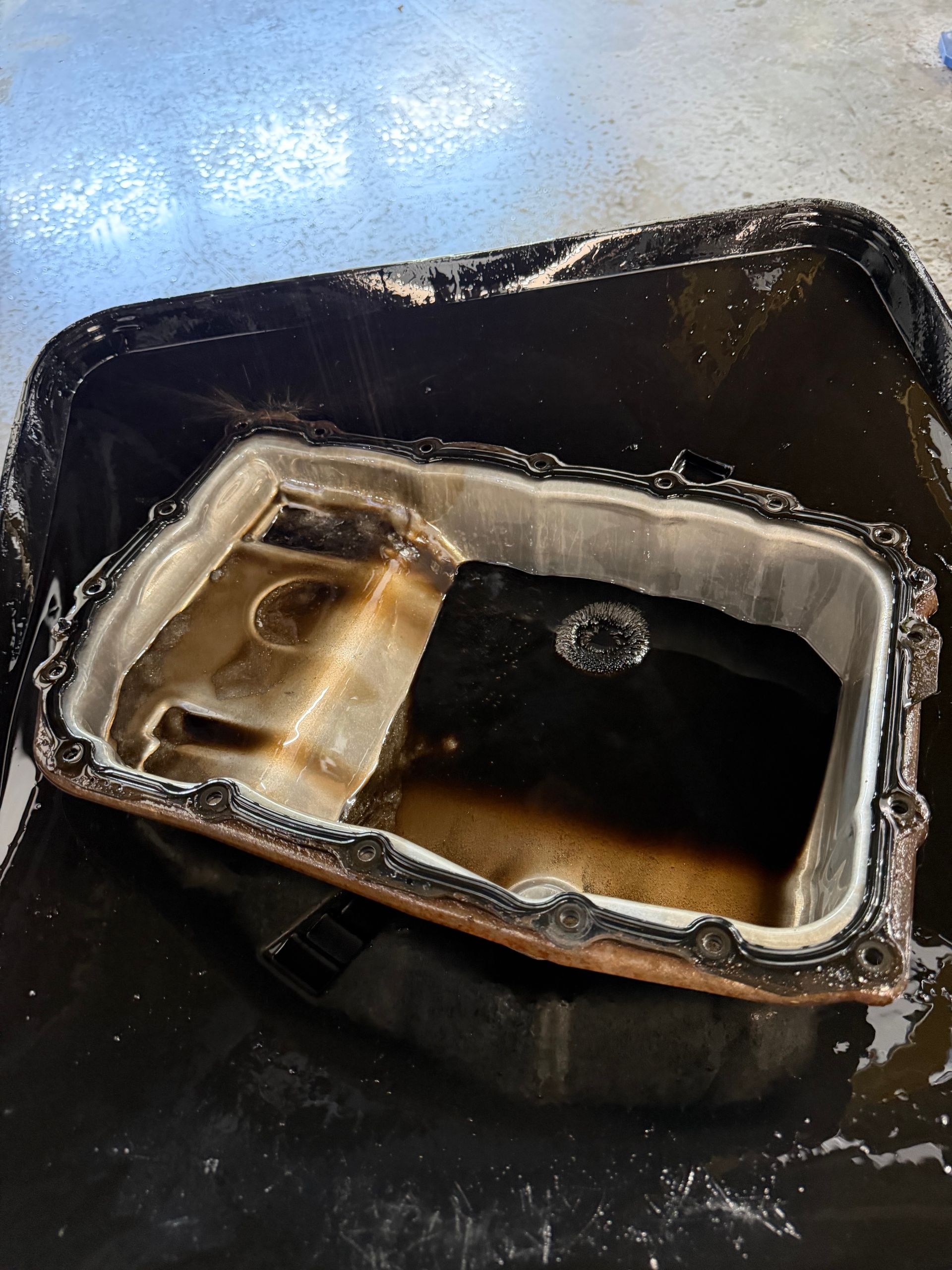
Is there excessive debris in the pan?
Those findings can provide important clues about what's happening internally.
This is one reason we don't automatically recommend a flush simply because a vehicle has a transmission complaint.
Sometimes the existing fluid and what's inside the transmission pan are valuable pieces of the diagnostic puzzle.
Maintenance Prevents Problems—It Doesn't Undo Them
The simplest way to think about transmission fluid service is this:
Service the transmission fluid to help maintain a properly operating transmission. Don't rely on a fluid service to repair a transmission that has already failed.
A fluid change cannot rebuild a worn clutch pack.
A flush cannot repair a damaged torque converter.
Fresh fluid cannot fix a worn valve body.
And adding fluid to a leaking transmission does not repair the leak.
When a vehicle already has symptoms, the correct order is to diagnose the problem, repair what's wrong, and then make sure the transmission has the correct fluid at the correct level.
Transmission Fluid Service & Transmission Diagnosis in Montgomery, NY
At Superior Transmissions & Auto in Montgomery, NY, we perform transmission services—but we also believe in being clear about what a transmission service can and cannot accomplish.
If your transmission is operating normally and you're looking for preventative maintenance, a transmission fluid service may be appropriate based on your vehicle, mileage, and service history.
If your vehicle is already slipping, shifting hard, hesitating going into Drive or Reverse, shuddering, leaking transmission fluid, or showing transmission-related warning lights, we recommend diagnosing the problem first.
And if your transmission is leaking, the priority is finding and repairing the source of the leak, restoring the proper fluid level, and then determining whether operating with low fluid caused any additional internal problems.
We specialize in transmission diagnostics and in-house transmission remanufacturing for customers throughout Montgomery, Middletown, Orange County, and the Hudson Valley.
The goal isn't to sell a fluid service and hope for the best.
It's to determine what your transmission actually needs.
Superior Transmissions & Auto
663 State Route 17K
Montgomery, NY 12549
(845) 522-8104
When Bad Shifts Happen, We Fix It!