August 11, 2026
Symptoms of a Bad Transmission Solenoid Explained
When your vehicle starts shifting hard, hesitating before going into gear, getting stuck in one gear, or turning on the check engine light, you may hear the term “transmission solenoid” come up during diagnosis.
But what exactly is a transmission solenoid, and what happens when one goes bad?
Transmission solenoids are small electronically controlled components that play a major role in how an automatic transmission operates. A solenoid problem can cause noticeable shifting issues, but it’s also important to understand that a trouble code mentioning a solenoid does not always mean the solenoid itself is bad.
Here’s what you should know.
What Does a Transmission Solenoid Do?
An automatic transmission relies on transmission fluid and hydraulic pressure to apply different clutches and components inside the transmission. That hydraulic pressure has to be directed to the right place at the right time.
That’s where solenoids come in.
Transmission solenoids are electronically controlled valves. Your vehicle’s computer commands them to open, close, or regulate fluid pressure based on things like vehicle speed, throttle position, engine load, and driving conditions.
In simple terms, the computer makes the decision, the solenoids help control the fluid, and the hydraulic pressure helps make the shift happen.
Modern transmissions may contain several different solenoids, each responsible for a different function.
What Are Shift Solenoids?
Shift solenoids help control which gear the transmission is operating in. The vehicle's computer commands different combinations of solenoids as you accelerate and slow down.
When there is a problem with a shift solenoid—or with the hydraulic circuit that solenoid controls—you may experience symptoms such as:
- Hard or harsh shifting
- Delayed shifts
- Transmission slipping or flaring between gears
- Getting stuck in a particular gear
- Failure to shift into certain gears
- Erratic or unpredictable shifting
- Check engine or transmission warning lights
- Limp mode
The exact symptoms depend on the transmission and which circuit is affected.
What Is a Pressure Control Solenoid?
Not every transmission solenoid simply turns something on or off.
Pressure control solenoids regulate hydraulic pressure inside the transmission. The computer can increase or decrease the solenoid's command to change how much pressure is being applied.
Correct pressure is extremely important.
Too little pressure can allow clutches to slip and create excessive heat and wear. Too much pressure can cause extremely firm or harsh shifts.
This is why a pressure control solenoid problem can sometimes make a transmission behave as though it has a much larger internal problem.
What Is a TCC Solenoid?
Another solenoid you may hear about is the Torque Converter Clutch, or TCC, solenoid.
The torque converter allows the engine to transfer power to the transmission while still allowing the vehicle to sit at a stop with the engine running. Under certain driving conditions, the torque converter clutch locks to create a more direct connection and improve efficiency.
The TCC solenoid helps control this process.
Problems involving the TCC system may cause:
- Shuddering or vibration
- RPM fluctuations while cruising
- Poor fuel economy
- Torque converter clutch slipping
- Check engine light
- Transmission overheating
- Stalling when coming to a stop in certain failure situations
A common torque-converter-related code is P0741 – Torque Converter Clutch Performance or Stuck Off, but even a code like P0741 does not automatically tell us which component has failed.
What Causes a Transmission Solenoid to Go Bad?
Solenoids are electrical and mechanical components, so there are several ways problems can develop.
A solenoid itself can electrically fail, stick, become contaminated with debris, or wear over time. However, the problem can also be somewhere else in the system.
Possible causes include damaged wiring or connectors, contaminated transmission fluid, low fluid, valve body wear, hydraulic pressure problems, internal transmission wear, or a computer/control issue.
This is one reason proper diagnosis is so important before replacing parts.
Does a Solenoid Code Mean the Solenoid Is Bad?
No—and this is one of the most important things to understand about transmission trouble codes.
A diagnostic trouble code tells a technician what the vehicle's computer has detected. It does not necessarily identify the exact failed part.
For example, if a vehicle has a pressure control solenoid performance code, the solenoid itself could be faulty. But the transmission could also have a worn valve body, restricted hydraulic passage, wiring problem, incorrect fluid pressure, or internal damage causing the computer to see something it doesn't expect.
Replacing a solenoid simply because its name appears in a trouble code can become an expensive guessing game.
Can a Bad Valve Body Cause Solenoid Codes?
Yes.
Many modern transmissions have solenoids mounted directly to or incorporated into the valve body. The valve body contains a network of passages and valves that direct transmission fluid throughout the unit.
Wear inside the valve body can cause hydraulic pressure to leak or behave differently than the computer expects.
In some cases, the computer may detect the resulting pressure or shift problem and set a solenoid-related code even though replacing the solenoid alone won't correct the underlying issue.
This is why transmission diagnosis involves much more than plugging in a scanner and reading codes.
How Do You Diagnose a Bad Transmission Solenoid?
Diagnosis depends on the vehicle and transmission, but a technician may start by scanning the vehicle for diagnostic trouble codes and reviewing live transmission data.
Whenever possible, the vehicle should also be test driven so the technician can see when and how the problem occurs.
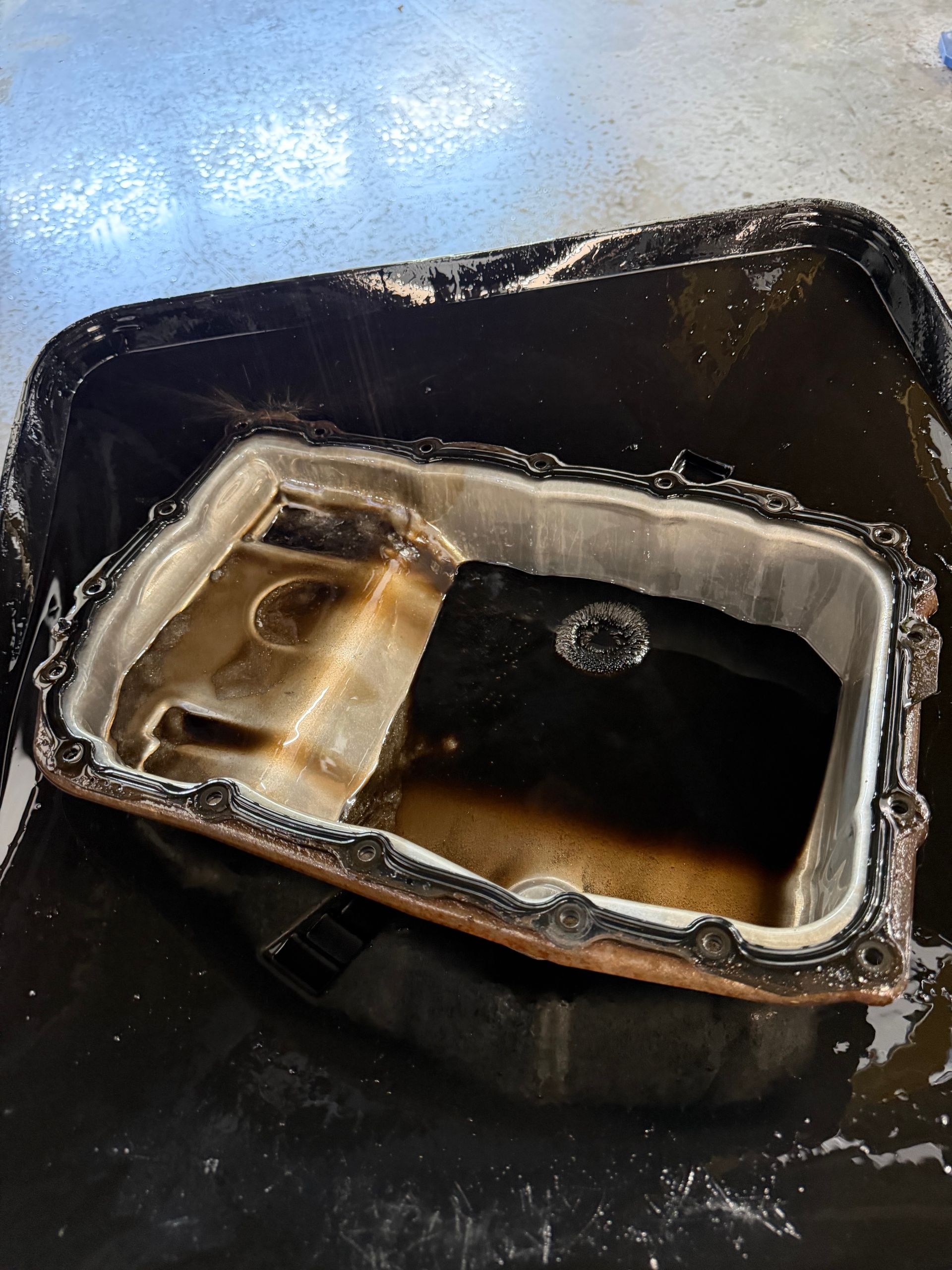
Depending on the symptoms, further testing may include checking transmission fluid condition and level, inspecting wiring and connectors, monitoring commanded versus actual transmission operation, performing electrical testing, checking hydraulic pressure, or inspecting the transmission pan for signs of internal wear.
Finding clutch material or metal in the transmission pan, for example, can completely change the direction of the diagnosis.
The goal shouldn't be to find a part that matches a trouble code. The goal is to determine why the transmission isn't operating correctly.
Can You Drive With a Bad Transmission Solenoid?
It depends on the type and severity of the problem, but continuing to drive a transmission that isn't shifting correctly can turn a smaller problem into a much more expensive one.
If a pressure problem causes a clutch to slip, every time that clutch slips it can create additional heat and wear.
A vehicle that initially has an intermittent shift problem may eventually develop significant internal transmission damage if the underlying problem isn't addressed.
If your transmission suddenly begins slipping, banging into gear, refusing to shift, getting stuck in gear, or displaying a transmission warning, having it diagnosed sooner rather than later is usually the safest approach.
Does a Bad Solenoid Mean You Need a New Transmission?
Some solenoid problems can be repaired without completely remanufacturing the transmission. Other times, a solenoid-related symptom is actually the result of valve body wear or internal transmission damage.
The important part is determining what failed and why it failed before deciding how to repair it.
At Superior Transmissions & Auto in Montgomery, NY, we specialize in transmission diagnostics and in-house transmission remanufacturing. We don't believe in replacing expensive transmission parts based on a trouble code alone.
We look at how the vehicle is actually behaving, scan the transmission computer, evaluate the fluid and hydraulic system when appropriate, and look for the underlying cause of the problem.
If you're experiencing hard shifting, delayed shifting, transmission slipping, erratic shifts, or a transmission solenoid code in Montgomery, Orange County, or the Hudson Valley, having the vehicle properly diagnosed can help determine whether you're dealing with an electrical problem, valve body issue, solenoid failure, or a larger internal transmission problem.
Superior Transmissions & Auto
663 State Route 17K
Montgomery, NY 12549
(845) 522-8104
When Bad Shifts Happen, We Fix It!