August 12, 2026
What Is a Transmission Pan Drop? Why It’s an Important Part of Transmission Diagnosis
When your vehicle is having transmission problems—slipping, hard shifting, delayed engagement, shuddering, strange noises, or simply not driving correctly—a scan tool and a test drive can tell us a lot. But they don’t always tell the entire story.
One of the most valuable steps in properly diagnosing a transmission problem is something called a transmission pan drop.
At Superior Transmissions & Auto in Montgomery, NY, we may recommend dropping the transmission pan as part of the diagnostic process because it allows us to see something a computer scanner cannot: what is physically happening inside the transmission.
What Is a Transmission Pan Drop?
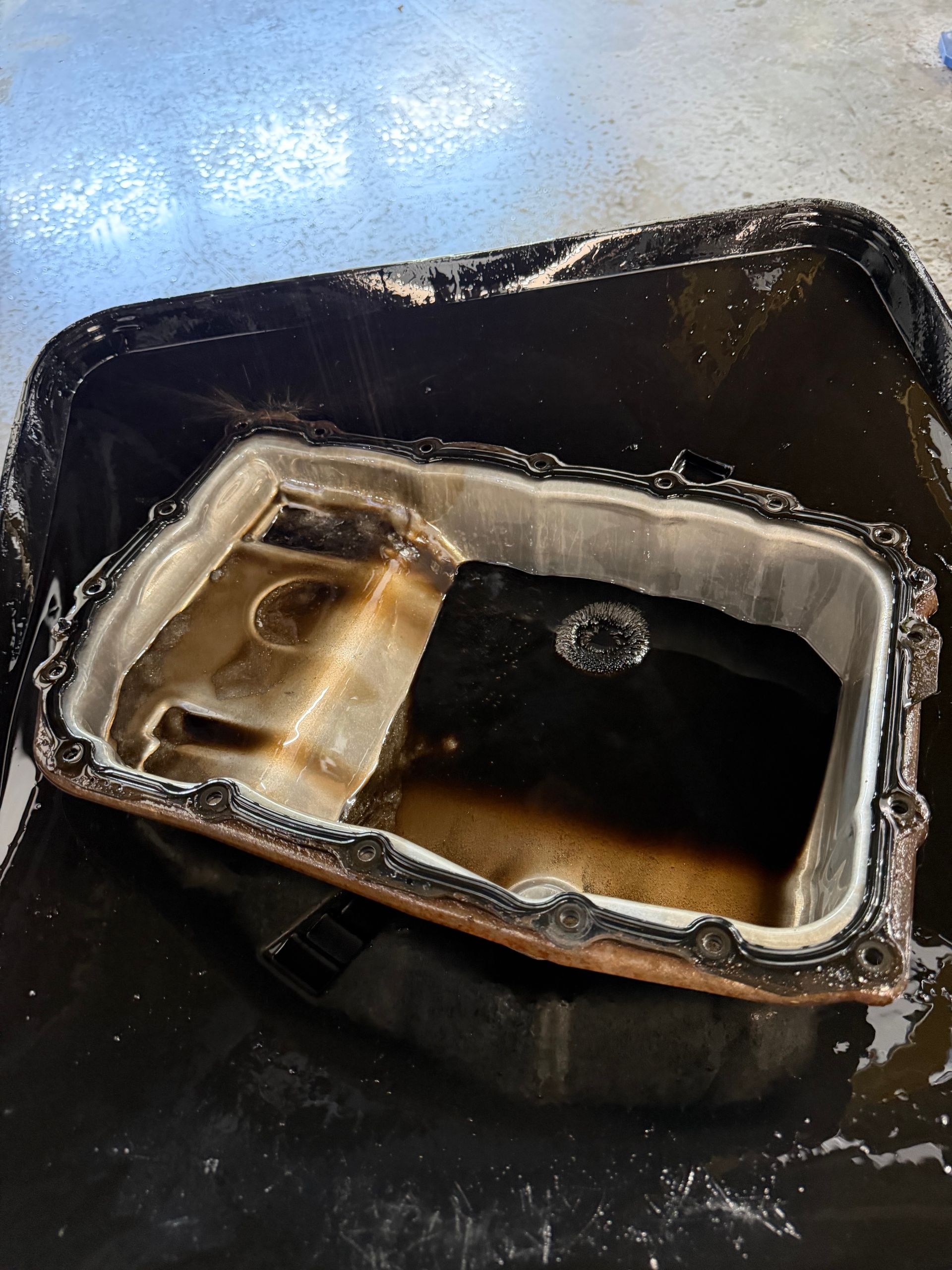
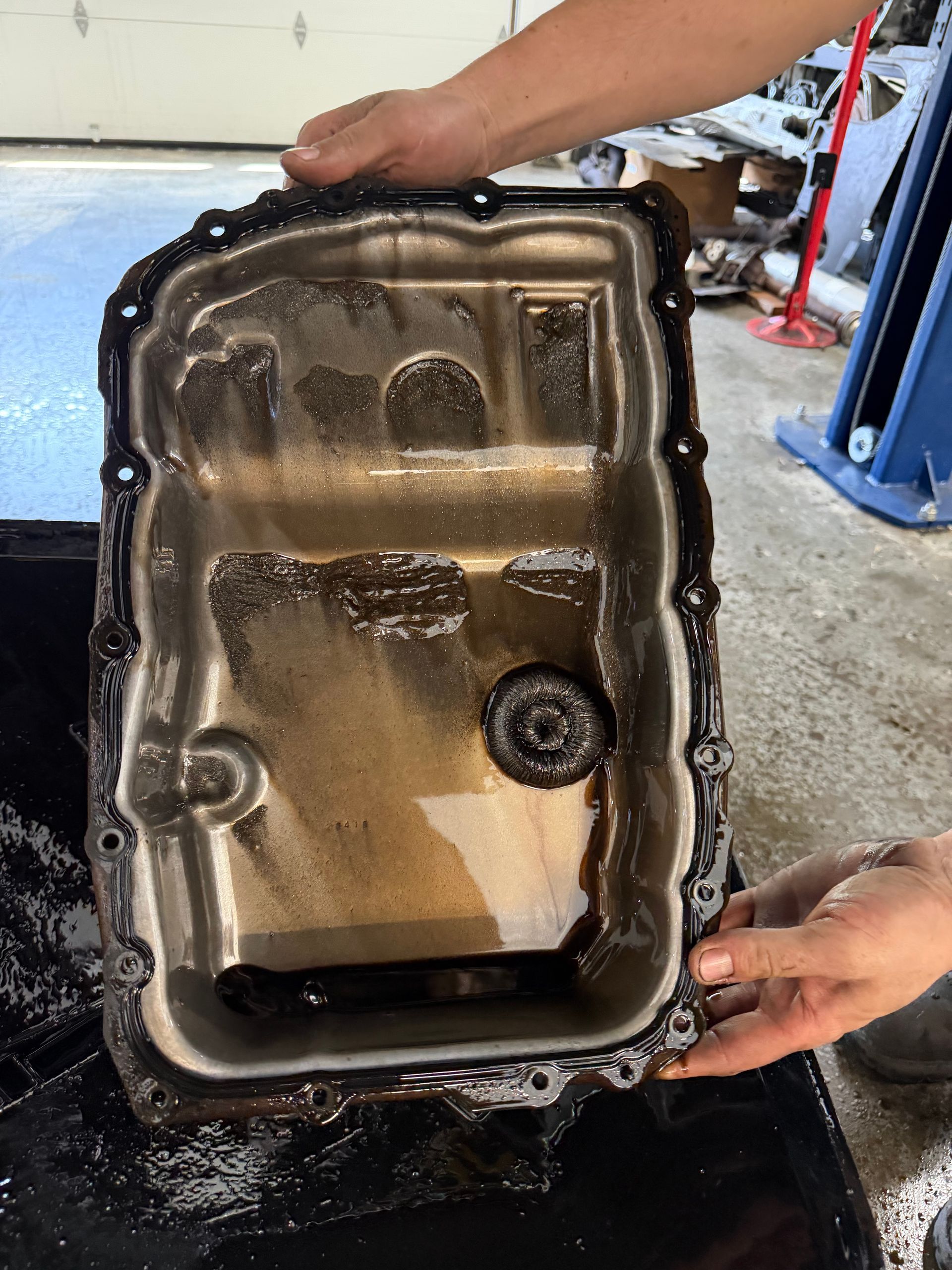
Most automatic transmissions have a removable pan located on the bottom of the transmission. This pan holds a portion of the transmission fluid and provides access to components such as the transmission filter and, on many vehicles, the valve body.
A pan drop means carefully removing this pan so our technicians can inspect the transmission fluid, the bottom of the pan, the magnet, and any material or debris that has accumulated inside.
This is different from simply checking the transmission fluid level.
Transmission fluid can provide useful information, but the material found inside the pan can give us a much clearer picture of the transmission’s internal condition.
Why Do We Drop the Transmission Pan During Diagnosis?
Transmission problems aren't always as simple as reading a trouble code.
Your vehicle's computer may store codes for gear-ratio errors, torque converter performance, pressure problems, solenoid faults, or other transmission-related concerns. Those codes tell us what the computer has detected, but they don't necessarily tell us why it is happening.
For example, a transmission may be slipping because of worn internal clutches. It could have a hydraulic pressure problem. It could have a valve body issue. A torque converter could be failing. There may also be significant internal damage that isn't immediately obvious from a scan or road test.
Dropping the pan gives our technicians another important piece of the diagnostic puzzle.
Rather than guessing based on symptoms or replacing parts based solely on a trouble code, we want as much information as possible before recommending a repair.
What Can a Transmission Pan Tell Us?
Once the pan is removed, we're looking for several things.
Transmission Fluid Condition
The color, smell, and overall condition of the fluid can provide clues about what has been happening inside the transmission.
Dark or burnt-smelling transmission fluid can indicate excessive heat or internal clutch wear. Fluid contamination can also point us toward certain types of failures.
However, fluid condition alone does not determine whether a transmission is good or bad. It is just one part of the overall diagnosis.
Clutch Material
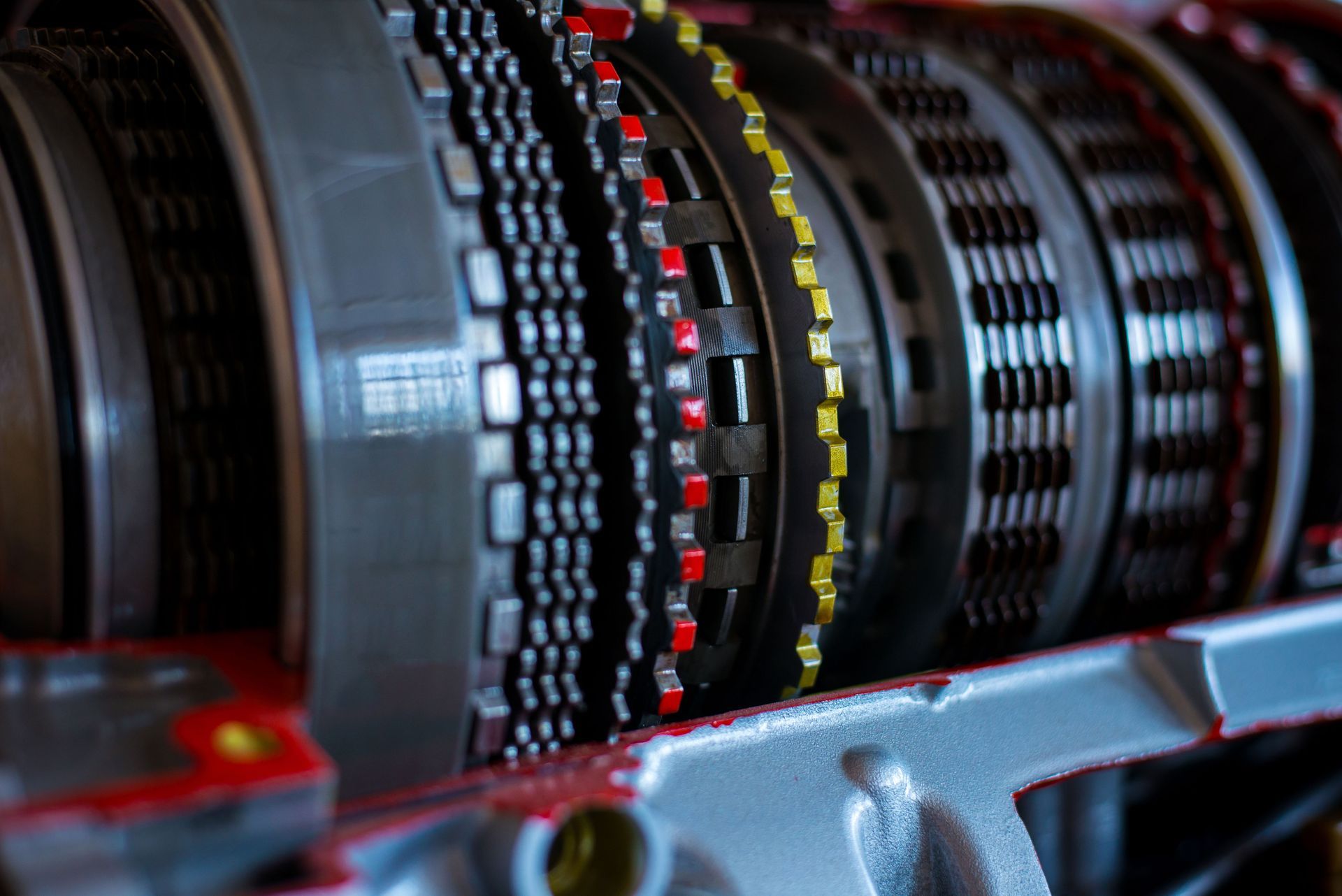
Automatic transmissions contain friction materials that naturally experience some wear over time. A small amount of material may be normal depending on the transmission's mileage and service history.
A large amount of clutch material in the pan is a different story.
Excessive friction material can indicate that internal clutches are wearing or have already begun to fail. This can help explain symptoms such as:
- Transmission slipping
- RPM increasing without the vehicle accelerating properly
- Delayed engagement into Drive or Reverse
- Flare shifts between gears
- Missing gears
- Harsh or inconsistent shifting
Metal Debris
Metal in a transmission pan can be particularly important.
Fine material on a transmission magnet isn't automatically a sign that the transmission has failed. Some normal wear occurs throughout the life of a transmission.
What matters is how much material is present and what type of material we're finding.
Larger metal particles, excessive metallic debris, or pieces of internal components can indicate significant internal damage.
The Transmission Magnet
Many transmission pans contain magnets designed to capture metallic particles circulating through the fluid.
Inspecting the amount and type of material collected on these magnets gives an experienced transmission technician additional information about internal wear.
Again, some material may be expected. An excessive amount can indicate a much larger problem.
Why Can't You Just Scan the Car?
Modern diagnostic equipment is extremely useful, and scanning the vehicle is an important part of our diagnostic process—but a scanner cannot see inside a transmission.
A diagnostic trouble code tells us what the vehicle's computer noticed.
It doesn't necessarily tell us what physically failed.
For example, a gear-ratio code may tell us that the transmission isn't achieving the gear ratio the computer expects. That doesn't automatically tell us whether the cause is a worn clutch, hydraulic pressure loss, valve body problem, solenoid issue, or another internal failure.
That's why proper transmission diagnosis often involves several steps, including a scan, road test when possible, fluid inspection, lift inspection, and, when appropriate, a transmission pan drop.
Each step gives us another piece of information.
A Pan Drop Can Help Prevent Unnecessary Repairs
One of the biggest reasons we believe in thorough transmission diagnosis is that we don't want to recommend repairs based on assumptions.
Suppose a vehicle has a transmission-related code that could potentially be caused by a valve body or solenoid problem.
If we remove the pan and find significant clutch material and metal debris, that changes the situation. Replacing only the valve body may not address the underlying internal damage.
On the other hand, if the pan is relatively clean and the other diagnostic information supports a repair that doesn't require rebuilding the entire transmission, that is also valuable information.
The goal of a pan drop isn't to automatically condemn a transmission. It's to help us make a better-informed diagnosis.
Why We Don't Believe in Guessing With Transmission Problems
Transmissions are complicated assemblies containing clutches, drums, pumps, valves, solenoids, bearings, bushings, planetary gearsets, and many other components working together through hydraulic pressure and electronic controls.
Many different failures can create similar symptoms.
That's why diagnosing a transmission based only on a code—or simply assuming that a certain symptom means the transmission needs to be rebuilt—can lead to unnecessary repairs or an incomplete repair.
At Superior Transmissions & Auto, our diagnostic process is designed to gather as much information as reasonably possible before determining the next step.
When appropriate, dropping the transmission pan is an important part of that process.
What Happens After We Drop the Pan?
The pan inspection is combined with everything else we've learned about the vehicle.
We consider the customer's complaint, trouble codes, road-test results when the vehicle can safely be driven, transmission operation, fluid condition, debris found in the pan, and any other relevant diagnostic information.
From there, we can make a more informed recommendation.
Sometimes the findings may point toward a repair involving external controls, a valve body, or another component. Other times, the amount or type of debris in the pan may indicate that the transmission needs to be removed, disassembled, and inspected internally.
The important part is that we're basing that recommendation on evidence—not guesswork.
Can You Tell If a Transmission Is Bad by Looking at the Fluid?
Not always.
This is an important distinction because many people search for answers like "How do I know if my transmission is bad?" or "Does dirty transmission fluid mean I need a new transmission?"
Fluid is only one indicator.
We've seen transmissions with relatively normal-looking fluid that still have internal problems, and fluid that looks poor doesn't automatically mean the entire transmission needs to be replaced.
That's why we look at the complete picture.
A proper transmission diagnosis may involve the vehicle's symptoms, diagnostic codes, live scan data, road-test behavior, fluid condition, pan contents, and physical inspection.
Will Changing the Transmission Fluid Fix a Slipping Transmission?
If a transmission is already slipping because of worn or damaged internal components, changing the fluid does not repair those components.
Transmission fluid services are maintenance. They can help maintain a healthy transmission when performed at appropriate intervals, but they are not a repair for worn clutches, damaged hard parts, a failing torque converter, or other internal transmission failures.
This is another reason a pan inspection can be so useful.
If we're finding substantial evidence of internal failure, simply replacing the fluid isn't going to correct the underlying problem.
Transmission Diagnosis in Montgomery, NY
If you're experiencing transmission slipping, hard shifting, delayed engagement, transmission shuddering, transmission warning lights, or other transmission problems in Montgomery, Orange County, or the Hudson Valley, getting the vehicle properly diagnosed is the first step.
At Superior Transmissions & Auto in Montgomery, NY, we specialize in transmission diagnosis and in-house transmission rebuilding. Our diagnostic process is designed to determine what is actually happening with the vehicle before recommending the appropriate repair.
A transmission pan drop may seem like a small part of that process, but the information inside that pan can be extremely valuable.
The more we can see, test, and verify, the less we have to guess.
Think You Have a Transmission Problem?
If your transmission is slipping, shifting hard, hesitating before going into Drive or Reverse, making unusual noises, or just doesn't feel right, bring it to Superior Transmissions & Auto in Montgomery, NY.
We'll diagnose the problem and determine the appropriate next step based on what your vehicle is actually telling us—not just a trouble code.
Superior Transmissions & Auto
663 State Route 17K
Montgomery, NY 12549
(845) 522-8104
Serving Montgomery, Middletown, Newburgh, New Windsor, Walden, Maybrook, Orange County, and the Hudson Valley.